Top Tech

Trends in Insurance

The insurance industry is all set for disruption. New technologies are emerging that have the potential to transform the way insurance is delivered, priced, and sold.
Here are some of the top technology trends that are transforming the insurance industry:
These are just a few of the top technology trends that are transforming the insurance industry. As these technologies continue to develop, they will have a profound impact on the way insurance is delivered, priced, and sold.

Proposed de-notification of

TAC tariff for Fire, Motor & Engineering Insurance

In Oct 2022, IRDA proposed to modify Sec 64 ULA(1) for de-notification of erstwhile TAC tariff for Fire, Motor & Engineering lines of business with respect to amongst other things, the policy wordings.
De-notification is proposed for the tariffed policy wordings, terms, conditions of the Fire, Engineering and Motor lines of business. Insurers shall continue to offer Existing products (filed and UIN allotted) including standard products that are familiar in the market and have been tried and tested. The market shall be enabled to evolve best practices with respect to product & service innovations by Insurers/ Intermediaries as the Insurers shall be free to work on bespoke forms and structures. Risk-centric underwriting shall be promoted and risk mitigation and loss control by Insureds shall be incentivized.
Insurers/ Reinsurers shall be able to align towards affording fair choice to discerning insurance buyers as IIB referenced rates or any other model of minimum pricing restrictions shall not to be reintroduced. Prohibition of excess of loss, first loss, agreed value and stand-alone peril insurance shall be repealed.
With respect to Terrorism coverage, it has been proposed to reform the rules in such manner that maximum domestic premium is retained in the Pool. Cedants shall be allowed to continue to retain part of the risk, to their unprotected net account, as per their risk appetite but they shall not be permitted to set up and utilise own reinsurance arrangements or access other facilities in priority over the Pool. However, wider scope of cover or limits in excess of the Pool limit can continue to be reinsured (proportionally or non-proportionally) as DIC / DIL cover after cession to the Terrorism Pool. Insured interests that fall within the exclusions of the Terrorism Pool shall continue to be offered to the Terrorism Pool, however, Cedants would have liberty to arrange own Terrorism/ Political Violence capacity in excess of Pool Limits.
img
The proposed change recommendations shall encourage risk specific underwriting based on risk quality rather than portfolio loss experience basis as a result the risk portfolio assumed by insurers shall improve as 100% peak exposures shall get pared to loss limits. Further, contribution by ‘attrition’ losses to insurer portfolio shall be reduced.

Facilitating Prevention by

Fire Loss Control

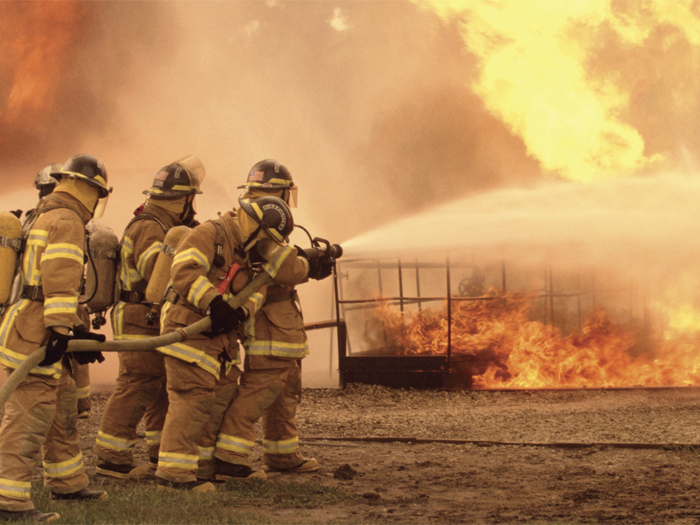
Protecting domestic and commercial structures from fire has been a central issue in property safeguarding. Fire poses grave risks in terms of safety to occupants, building integrity, business interruption and the economic health of a community. Consequently, reduction in fire risk has been a priority for society, achieved through continually improving understanding of all the factors that contribute to fire risk.
Insurance companies, too, can no longer expect to insure a facility for an extended time, and thus have less incentive to make an investment in providing ongoing loss control services. Preventing fire losses has always been comparatively more important to the insured than to the insurer. Although a particular fire loss may not be statistically significant to an insurance company, to the building owner it is not only a financial issue but also impacts on employee morale, access to suppliers and the economic confidence of the community.
Foremost, designing and building structures in compliance with building and fire code requirements, and insurance industry guidelines, contributes significantly to the reduction of fire losses.
During new construction or renovation projects, the importance of fire protection must not be forgotten. Following local building and fire codes is the best way to ensure the structure of your building is set up to slow the spread of fire viz. Self-closing fire doors, Fire dampers in the ductwork etc.
Certain important steps are necessary to be followed on a routine manner to make building and structures less vulnerable to fire viz. Cleaning up dust and debris, Storing flammable materials properly, Unblocking of fire sprinkler heads, Regular inspection of electrical equipment, Hot Work Permits, Neutralising possibility of leakage of liquefied petroleum or natural gas etc. Appropriate quantities of firefighting equipment should be installed in your business premises at the right places. Portable extinguishers put the firefighting power in the hands of people who witness the fire start. Their quick response may be enough to extinguish the blaze swiftly, minimizing property loss as a result.
Water is an effective extinguishing agent for ordinary fires, but sometimes blazes break out when no one is around. That is why fire sprinklers are so important in both industrial and non-industrial facilities. They offer 24/7 protection against unexpected fires, whether someone is in the premises or not.
img

Not all fires respond well to water. In areas of the building where grease fires, electrical fires, and flammable liquid fires are likely to occur, a fire suppression system like gaseous fire suppression and condensed aerosol fire suppression systems may be preferable to sprinklers. The main purpose of using fire hydrant system is to give best possible source of water to each corner of the building or premises. It helps in protecting the building by simply taking control on fire during an emergency.

Many large industries have their dedicated Fire Safety Department and Fire Engines so that major fires are controlled and extinguished by the in-house brigade before it spreads. The Department is headed by a qualified Fire Engineer often called the Fire Safety Officer, who has a well-trained team.

Major fires have crippled industries and caused fatal injuries to many. Fire and business interruption insurance covers only the tip of the iceberg, most parts like loss of contracts, markets and goodwill that may take years to overcome have to be borne by the business. While loss prevention and loss minimisation are aspects insurers are concerned with right from the time a risk is assessed to the time a fire claim occurs, there is a need to synergise the activities of the various stakeholders involved in these activities for the larger benefit of all concerned.

International Code of Practice on

Tunnel Construction

Expensive tunnel construction losses have resulted in the creation of a risk management-based code of practice. The code is designed to promote the participation of all the stakeholders to a tunnel construction project from the client, the designer, the site supervisor, the project management team, and the contractor.
As there are other issues, such as the environment, it will need input from other stakeholders too. Indeed, the views of the public are also an important element in a tunnelling project from its conception to its final use.
Technological innovations in tunnelling have been seen in recent years, particularly related to soft ground tunnelling and the use of tunnel boring machines (TBMs). Such construction methods have moved the industry a long way towards efficient and safe tunnelling.
Because of some large loss incidents recently the insurance industry has been looking hard at its risk and liability on major tunnelling projects. Current statistics indicate that the leading tunnel insurers' combined ratios have been between 500-1000% in the last five years. As a result, many insurers are reluctant to underwrite new tunnelling business.
Investigations into recent collapse incidents have shown that hazards can be overlooked, and if they are not identified, they cannot be mitigated or controlled through preventive management systems. It was found that the failure of TBM tunnels in most incidents featured common risk factors related to design and construction issues. This contrasts with the collapse of the New Austrian Tunneling Method (NATM) tunnel in recent accidents where apart from poor design and planning, a lack of engineering control and safety management were blamed.

Other collective lessons have been that:

- The potential for major accidents must be recognised by hazard identification, consequence analysis and risk reduction strategies.
- New technologies need to be thoroughly understood and tested before being implemented.
- Defensive precautionary systems need to balance program and commercial pressures.

The risk management function needs to continue on-site throughout the project to deliver the scheme to time and budget.
img

The need to apply rigorous risk-based design and construction principles have evolved in UK civil tunnelling projects out of a series of high-profile collapses, which prompted the insurance industry to raise its concerns.

It remains to be seen to what extent the joint code of practice is adopted and whether it can be exported to projects worldwide with project teams of different cultures. An international version of the tunnelling joint code has been published. GIC Re, the Indian reinsurer has already adopted implementation of this code and have started making it a warranty for insurance policies for tunnelling projects.

Impending Challenges for

The Global Marine Insurance Sector

The maritime sector faces some big challenges. The COVID-19 pandemic has dampened global trade and reshaped supply chains, potentially creating new risks and larger accumulations for the cargo market.
Even before the pandemic, the industry’s risk profile was being altered by the trend for larger vessels, a growing reliance on technology alongside measures to address climate change.

With such challenges ahead, a strong and stable insurance market is a must have. Marine underwriters will also need to be flexible and innovative if they are to respond to the rapidly changing needs of ship owners, operators, and cargo interests.

The effects of the coronavirus outbreak on global supply chains have disrupted manufacturing output causing delays to cargo in transit. Longer-term moves to improve business resilience could see companies hold more stock in storage and warehouses. This might prove challenging for insurers where accumulations of cargo exposures are already a key driver for losses.

Another area where insurers have experienced significant losses has been with fires on large containerships viz. APL Vancouver in 2019. In recent years, insurers have highlighted this important safety issue, requesting changes to Safety Of Life At Sea (SOLAS) regulations to improve firefighting capabilities on board large containerships. However, the problem of containership fires will not be solved by regulations alone. Improved firefighting capabilities will help, but the shipping industry and insurers must work together to address the root cause of containership fires, that of mis declared cargo. More and more hazardous products being shipped in containers – calcium hypochlorite, lithium batteries and charcoal are all suspected of having caused fires in recent years – yet too often cargo is incorrectly-declared and wrongly stowed.

img

Climate change and cyber are seen as important drivers of risk in the maritime sector in coming years. Technology brings opportunities to mitigate risks and improve safety, but it also can have unintended consequences. Human error linked to an overreliance on electronic navigation has emerged as a significant cause of claims for insurers. Ransomware attacks and spoofing incidents highlight the growing cyber threat for ports, shipping and logistics companies.

Environmental regulation continues to have a growing impact on marine insurance. IMO 2020, which limits sulphur emissions from ships, has led ship owners to use low sulphur blended fuels or fit scrubbers to clean vessel exhaust fumes at source. The change is likely to cause an increase in machinery damage claims as low sulphur fuels carry an increased risk of catalytic fines, which can clog filters and centrifuges, as well as damage other essential equipment. Teething problems with scrubbers have also led to claims, with fires during retrofitting and flooding caused by acid corrosion.

The marine insurance industry as of now has a problem with profitability. Despite growth in seaborne trade, global marine insurance premiums have not kept pace, and are lagging behind the increase in exposure from larger vessels, bigger ports and higher cargo values and accumulations.

Insurers are under intense pressure from stakeholders to produce underwriting profits, and it has been seen that capacity has contracted in major markets like London, where some insurers have withdrawn from marine lines. A healthy insurance market is essential for customers because a strong insurance industry is better able to respond to their needs. Rates are now increasing, but they have yet to reach levels that will compensate for the growing numbers of large claims, while the industry has yet to solve the problem of how to assess and price for accumulation.


Ransomware

In terms of threats for businesses and individuals, ransomware will remain the primary loss driver in 2023, and very likely also beyond. The numbers are significant.
According to experts, ransomware will cost its victims approximately US$ 265 billion annually by 2031. Some emerging trends make the situation grimmer. Alarmingly, our experts are seeing a trend towards data destruction rather than encryption, the pretence of data theft as a new successful form of extortion, and a concentration of ransomware attacks on cloud infrastructure. In addition, the alarmingly specialist expertise of cyber criminals and the ongoing sophistication of services like reconnaissance-as-a-service will enable the unscrupulous to attack with greater precision.
It has been observed in recent years that ransomware was, by far, the leading cause of cyber insurance losses. While business and professional services was the industry that was badly hit with the highest number of overall claims, the financial impact of market loss was heaviest on the finance industry.
img

Surety Bonds

The Game Changer

The Insurance Regulatory and Development Authority of India (IRDAI) had given the go-ahead to general insurers to issue surety insurance bonds from April 2022 onwards.

Surety bonds are an agreement between three parties, that is, the contractor, the government, and the insurance company. The contractor pays a premium to the insurance company, which will compensate the government if a contractor defaults or abandons before completing an infrastructure project by the mutually pre-decided deadline. 

Surety bonds will aid in developing an alternative to bank guarantees for the construction of infrastructure projects. However, these are different from bank guarantees as in this a considerable amount of the project funds of contractors does not get frozen as a requirement of collateral.

Security bonds act as damage control for the government if the infrastructure building company runs out of money or is not able to complete the project on time. It remains a legal document which assures that in the event of non-performance of the specified obligations, the insurer must provide compensation for loss and damage.

Worldwide, surety bonds are generally mandatory for public tenders and are extensively used in large projects, including infrastructure, construction, manufacturing, and resources, etc. Surety bonds are of two general categories: Commercial surety bonds and contract surety bonds. Commercial surety bonds are used by the judiciary to offer some kind of protection with regard to monetary deposits. Contract surety bonds are extensively used in the construction industry to cover the obligee against uncertain risks.

img

Considering that surety bonds tend to be long-term, they remain quite unaffected by economic volatility. This is what makes surety bonds more suitable than other forms of financing for the development of infrastructure projects. 

With concern about interest rates on the rise, surety bonds shall prove to be a reliable and cost-effective solution.

Capturing

The Climate Opportunity

As the renewable energy insurance market continues to grow, there are risk concerns including catastrophe exposures, inflation, and supply chain challenges.

The insurance industry is aware of the risks and knows it will require increased underwriting capacity and specialized talent to adequately serve the sector.

The renewable energy insurance market is set to grow by more than $200 billion worldwide in the next decade. Solar and wind outpace other forms of renewable energy deployment in North America, while the continent trails Europe and parts of Asia in developing offshore renewable sources.

More particularly, solar is on the rise, driven by its affordability as well as government incentives. Solar has experienced a 33% average annual growth rate in the last decade.

Natural catastrophe and extreme weather event claims continue to hit the renewables sector with greater frequency and severity. Cyclone and hailstorms resulted in solar losses almost twice as severe as the other top renewable losses of the last three years combined. Solar installations are most vulnerable to hail, which damages solar panels and takes away their output.

Advancements in solar engineering have led to the development of panels that are more resistant by moving away from hail or tilting in the right direction to protect themselves. However, the kinds of panels that are resistant to hail are not going to give operators the price break that they would probably want to justify purchasing them.

Supply chain issues will impact how soon hail-resistant panels can be purchased and whether they are cost effective enough to bring to market.

Insurers have begun charging solar developers higher premiums with large deductibles in response to recent hail losses.

img

The wind and solar sectors face many of the same natural catastrophe perils, such as flood, lightning and wildfire, as other industries such as construction. Wind farm underwriters are also concerned with the availability of cranes and rigging contractors to respond to repairs and installations.

Because wind turbine machinery breakdown is not automatically included in property coverage, it is critical for insureds to make sure they are covered. The same goes for transformer failure, which often needs to be added to coverage or bought by a separate policy.

While wind, like solar, is prone to losses during convective storms, many wind farms have monitoring systems that can identify when a lightning strike takes place.

The insurance industry will continue to play a critical role in the renewable energy sector as more complex Hybrid renewable energy projects are being developed around the world which will need comprehensive insurance covers. As new technologies emerge and the regulatory
landscape continues to evolve, insurance companies will have to continuously innovate in order to keep up with the changing needs of their Renewable energy customers. Insurance brokers and Insurance/ Reinsurance companies are developing innovative insurance solutions viz. parametric covers, to address the unique risks and challenges associated with these projects.

Insurance Counsulting Services At TrustPoint, we believe that everyone deserves the peace of mind that comes with knowing they are properly insured. That’s why we offer comprehensive insurance consulting services to individuals and businesses of all sizes.

Latest Portfolio

Need Any Help? Or Looking For an Agent

    © 2023 TrustPoint Risk Consulting Associates. All Rights Reserved.